

The secret to surfing in Europe
1,200 acres, 600 cows, and four concrete tanks later.

Sure, Hawaii, California, and Australia are known as surfing hubs, but mainland Europe has almost twice as many surf parks as any other region in the world. Half of those surf parks feature standing waves.
The abundance of Europe’s standing waves can be attributed in part to a committed community of river wave surfers that has grown steadily over the last five to six decades. No doubt Citywave, the world’s most prolific standing wave manufacturer, has also played a significant role by installing 13 pools across Europe. But the most important contributing factor could be energy.
Europe, especially when compared to the U.S., is known for sustainable energy and resource management. That innovation has permeated surf park venues like The Wave Bristol and Lost Shore Scotland. For standing waves, sustainability is perhaps no better evidenced than by Surflux, a Belgian surf park launched February 2026 within Hotel Luxembourg-Arlon.
The entire 125-room hotel, along with its two restaurants, 2,500 square meter wellness facility, and brand new surf park, runs on 100% green energy.
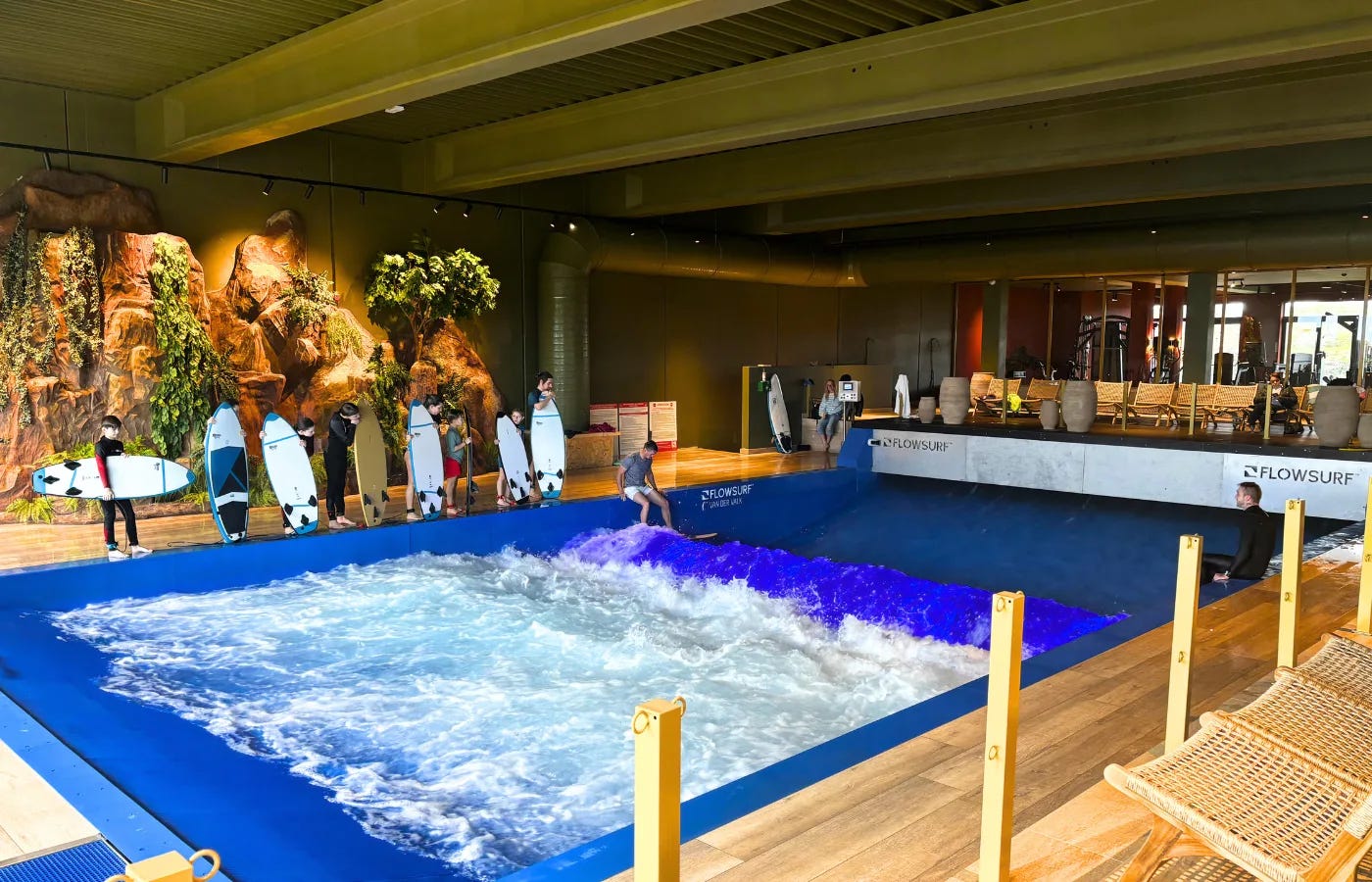
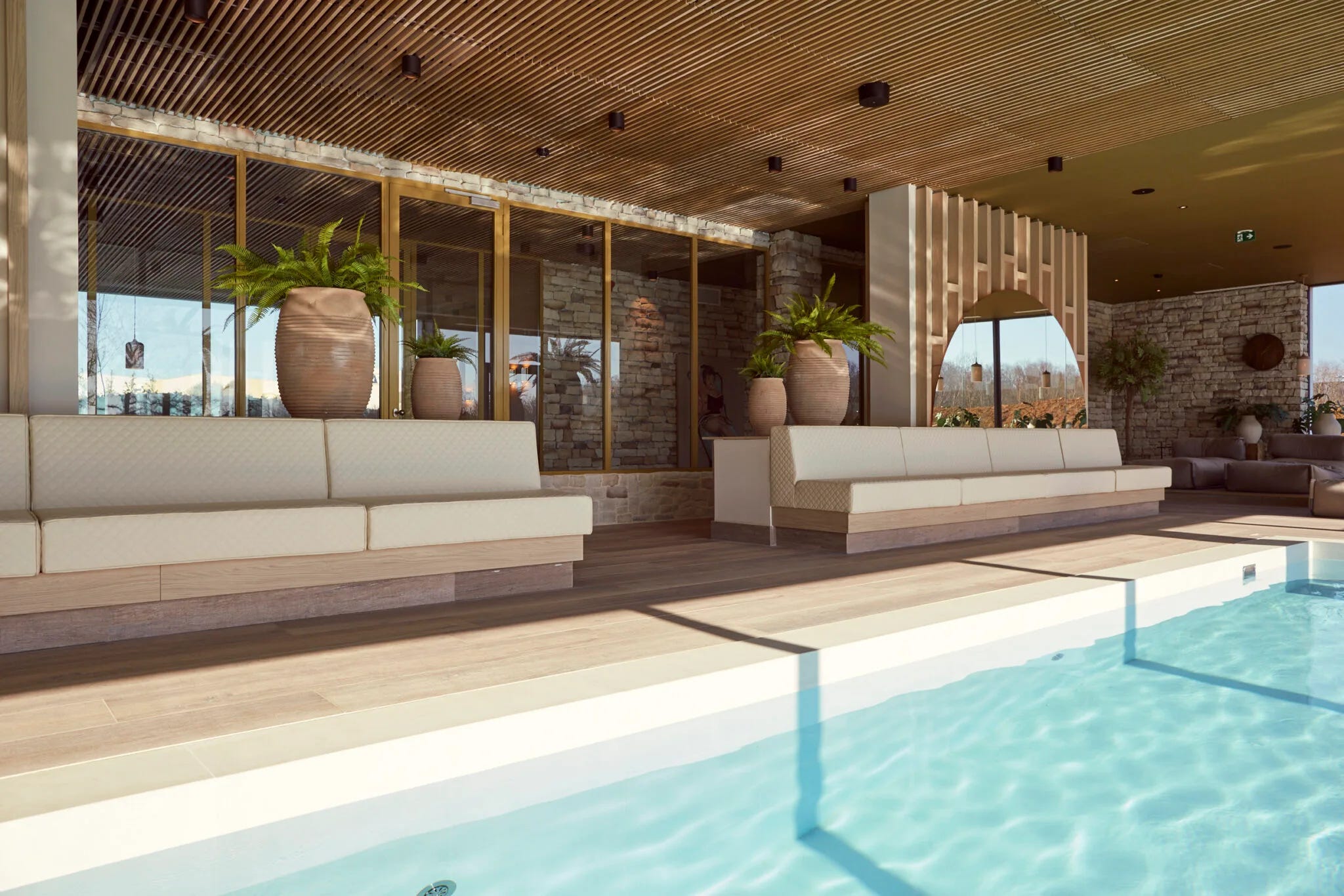
Surflux is no traditional real estate anchor nor is it a waterpark attraction. The first surf pool inside a hotel, Surflux is a unique amenity nestled alongside a spa that features saunas, jacuzzis, and massages. “I really want to create from this whole floor a feeling of health. Investing in your own body,” said Steven Zeeuw van der Laan, Director of Hotel Luxembourg-Arlon.
It’s just one of nearly 100, 4-star Van der Valk hotels. The chain started as a restaurant founded by Steven’s great-grandfather in the Netherlands. The family’s hotels stand out today because of their large restaurants and innovative amenities like casinos, cinemas, and karaoke. At one hotel, Steven’s brother installed horse stables, which have been a successful, low-maintenance attraction.
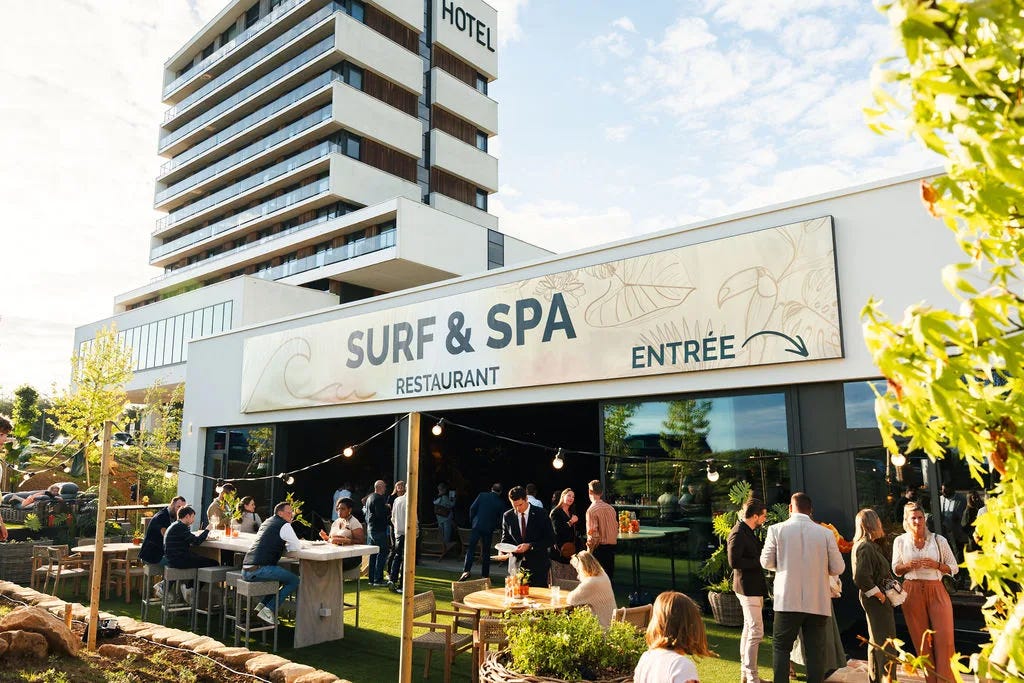
When Steven and his wife opened the Arlon hotel in 2017, they knew it would be important to add something special to attract guests because the hotel is outside of the nearest city, Luxembourg. In fact, it’s in a different country entirely, the nearby Belgium. By 2019, Steven was talking to wave pool manufacturers for the same reason that many surf park developers do—“I’m addicted to water sports,” said Steven.
On the surface, standing waves seemed like a perfect fit for a location three to four hours from the beach. “We were looking for something that didn’t exist yet. To create something for the region that would be an added value.” Steven liked the accessibility of the standing wave. It fits indoors and can run all year round, and works for a wide range of people.
The problem was energy. In Belgium, the grid is a challenge. “A big volume of electricity is not always available,” said Steven. The team invested early in energy self-sufficiency. 1,200 acres, 600 cows, and four concrete tanks later, they powered the entire hotel on a biogas plant that makes use of the 17,000 tons of annual waste from their partner farm.
When considering a wave pool manufacturer, energy was part of the conversation from the first meeting, but back in 2019, there were few viable options. The technologies in the market were simply too expensive to run so the team decided to wait. Eventually, they were invited to test a FlowSurf pool in Lyon, France, and they were impressed by its quality but even more impressed by its energy consumption being 50% less than alternatives.
With FlowSurf, the Surflux team doesn’t have to worry about fluctuating demand or off-peak hours draining their operating budget. They break even with one person in the pool. Keeping their surf park costs low is essential because, as Steven says, “it’s not directly a profit center, but it’s important to make the whole experience better and this is why people come back.”
After seven years, the Van der Valk hotel outside Luxembourg finally has its wave pool and Europe has one more surf park, extending its lead in the global industry. If Surflux is any indication, the future of surf parks may depend less on where surfers are located and more on how efficiently developers can use local resources to convert energy into waves.